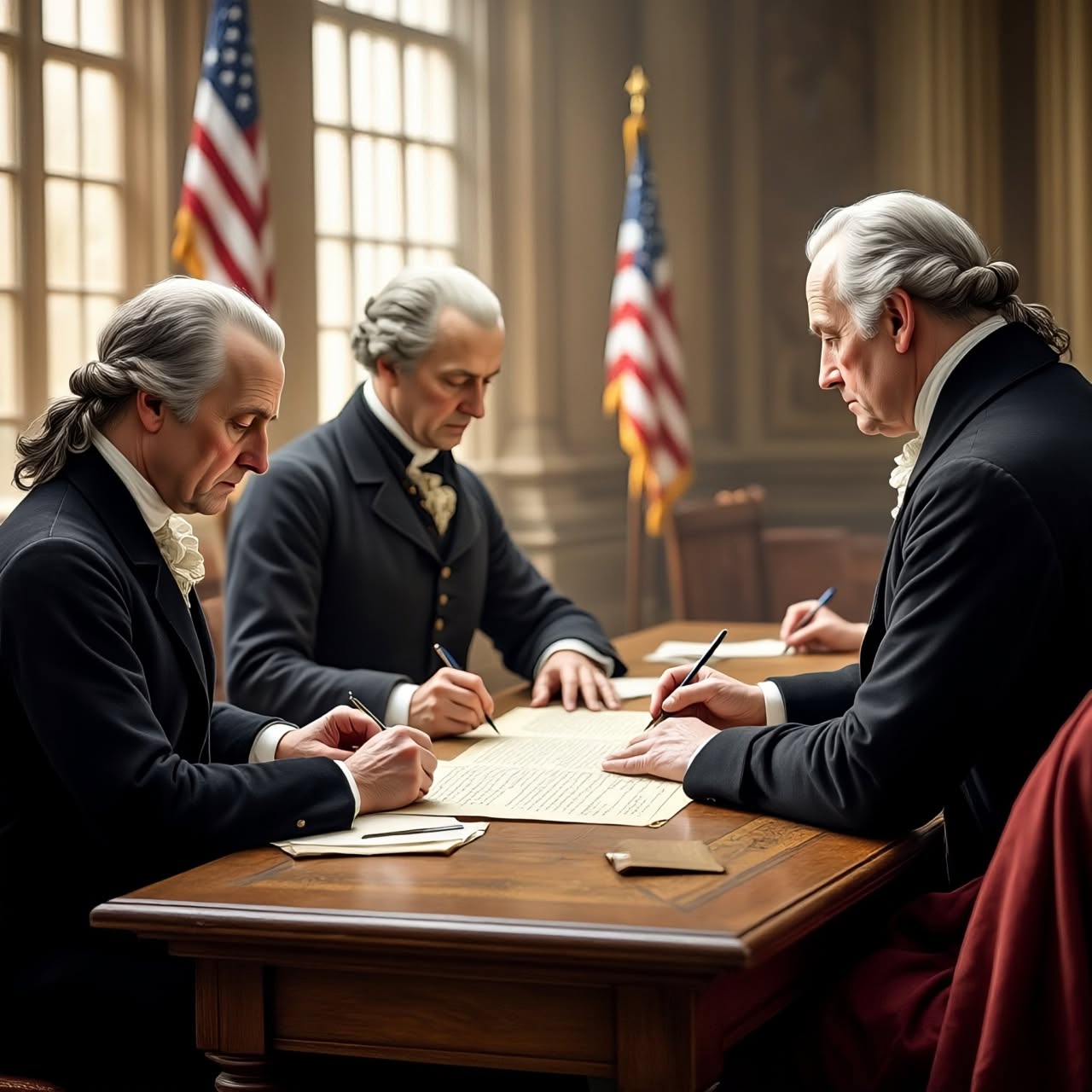
The Founding Era of the United States lasted from 1763 to 1789. It covers the time when 13 American colonies fought Britain, won independence, and created a new government. The American Revolution was the most important event of this era. It changed world history and created the first modern democracy
Causes of the Revolution 1763-1775
After the French and Indian War in 1763, Britain was in debt. The British government decided to tax the American colonies to pay for the war. Colonists were angry because they had no representatives in the British Parliament. Their slogan became “No taxation without representation.” Britain passed the Stamp Act in 1765, taxing newspapers and legal documents. Colonists boycotted British goods and the Act was repealed. In 1767, the Townshend Acts taxed tea, glass, and paper. Again, colonists protested. On March 5, 1770, British soldiers fired on a crowd in Boston, killing five people. This became known as the Boston Massacre. In 1773, colonists dumped 342 chests of British tea into Boston Harbor to protest the Tea Act. Britain punished Boston with the Intolerable Acts, closing the port. In response, 12 colonies sent delegates to the First Continental Congress in Philadelphia in 1774. They agreed to boycott British goods and prepare militias.
War Begins 1775-1776
On April 19, 1775, British troops marched to Concord, Massachusetts, to seize colonial weapons. Local militia, called minutemen, met them at Lexington. Shots were fired. This was “the shot heard round the world.” The Revolutionary War began. In June 1775, the Second Continental Congress chose George Washington to command the Continental Army. On July 4, 1776, Congress adopted the Declaration of Independence, written mostly by Thomas Jefferson. The document declared that all men are created equal and have rights to life, liberty, and the pursuit of happiness. It said the 13 colonies were now free and independent states.
Key Battles 1776-1781
The war lasted eight years. In December 1776, Washington crossed the Delaware River and surprised Hessian troops at Trenton, New Jersey. This victory saved the revolution. The winter at Valley Forge 1777-1778 was brutal. Over 2,500 soldiers died, but the army trained and became professional. The Battle of Saratoga in October 1777 was the turning point. Americans defeated British General Burgoyne. This victory convinced France to join the war on America’s side. French money, soldiers, and navy were critical. In October 1781, Washington and French General Rochambeau trapped British General Cornwallis at Yorktown, Virginia. The French Navy blocked escape by sea. Cornwallis surrendered on October 19, 1781. This ended major fighting.
Treaty of Paris 1783
On September 3, 1783, Britain and the United States signed the Treaty of Paris. Britain recognized American independence. The new country’s borders stretched from the Atlantic Ocean to the Mississippi River, and from Canada to Florida. About 100,000 Loyalists who supported Britain left for Canada or England. The war cost Britain over 100 million pounds and 24,000 lives. America lost about 25,000 soldiers.
Articles of Confederation 1781-1787
During the war, Congress wrote the Articles of Confederation, America’s first constitution. It created a weak central government with no president and no power to tax. Each state had one vote. The government could not pay war debts or control trade between states. By 1786, the country faced economic crisis and rebellion. Daniel Shays led farmers in Massachusetts to protest taxes and debt. Shays’ Rebellion proved the Articles were too weak.
Constitution and New Government 1787-1789
In May 1787, 55 delegates met in Philadelphia to fix the Articles. Instead, they wrote a new U.S. Constitution. James Madison is called the “Father of the Constitution” for his ideas. The document created three branches of government: executive, legislative, and judicial. It included checks and balances so no branch had too much power. After fierce debate, states ratified the Constitution. It went into effect on March 4, 1789. George Washington became the first president. The Bill of Rights, the first 10 amendments, was added in 1791 to protect individual freedoms.
Legacy of the Founding Era
The Founding Era created the United States of America. The Revolution inspired other countries, including France, to fight for democracy. The Constitution became a model for governments worldwide. The ideas of liberty, equality, and self-government from this era still guide America today. Key founding documents like the Declaration of Independence and Constitution are kept at the National Archives in Washington, D.C.