Learn about the American Civil Rights Movement from 1954 to 1968. Complete timeline, major events, key leaders like MLK Jr, Rosa Parks, and laws like Civil Rights Act 1964 explained with table.
The American Civil Rights Movement from 1954 to 1968 was the most important social movement in United States history. This period is called the Second Reconstruction because it completed the work that started after the Civil War. African Americans and their allies fought to end racial segregation and discrimination. They wanted equal rights in voting, education, jobs, and public places.
This movement changed America forever. It gave legal rights to millions of people who were treated as second class citizens. The ideas from this era still shape laws and debates today.
Why Did the Civil Rights Movement Start?
After the Civil War in 1865, slavery ended. But Southern states created Jim Crow Laws. These laws made racial segregation legal. Black people could not use the same schools, buses, restaurants, or bathrooms as white people. They also faced violence and could not vote freely.
By 1950, African Americans were tired of waiting. World War 2 veterans came home and asked why they could fight for freedom abroad but had no freedom at home. This anger started the movement.
Major Events Timeline of Civil Rights Movement 1954-1968
This table shows the most important events that defined the Founding Era of modern civil rights.
| Year | Event | Location | Impact | Key Leader |
|---|---|---|---|---|
| 1954 | Brown v. Board of Education | Topeka, Kansas | Supreme Court banned school segregation | Thurgood Marshall |
| 1955 | Montgomery Bus Boycott | Alabama | 381 day boycott ended bus segregation | Rosa Parks, MLK Jr |
| 1957 | Little Rock Nine | Arkansas | Federal troops protected Black students | Daisy Bates |
| 1960 | Greensboro Sit-ins | North Carolina | Started student protest movement | Ezell Blair Jr |
| 1963 | March on Washington | Washington DC | MLK gave “I Have a Dream” speech | Martin Luther King Jr |
| 1964 | Civil Rights Act | United States | Banned discrimination in all public places | President LBJ |
| 1965 | Voting Rights Act | Selma, Alabama | Removed barriers to Black voting | John Lewis |
| 1968 | Fair Housing Act | United States | Banned housing discrimination | Passed after MLK death |
Key Leaders Who Led the Movement
1. Martin Luther King Jr. 1929-1968
MLK Jr was the main face of the movement. He believed in nonviolent protest like Mahatma Gandhi. His “I Have a Dream” speech in 1963 is one of the most famous speeches in history. He won the Nobel Peace Prize in 1964. He was assassinated in 1968.
2. Rosa Parks 1913-2005
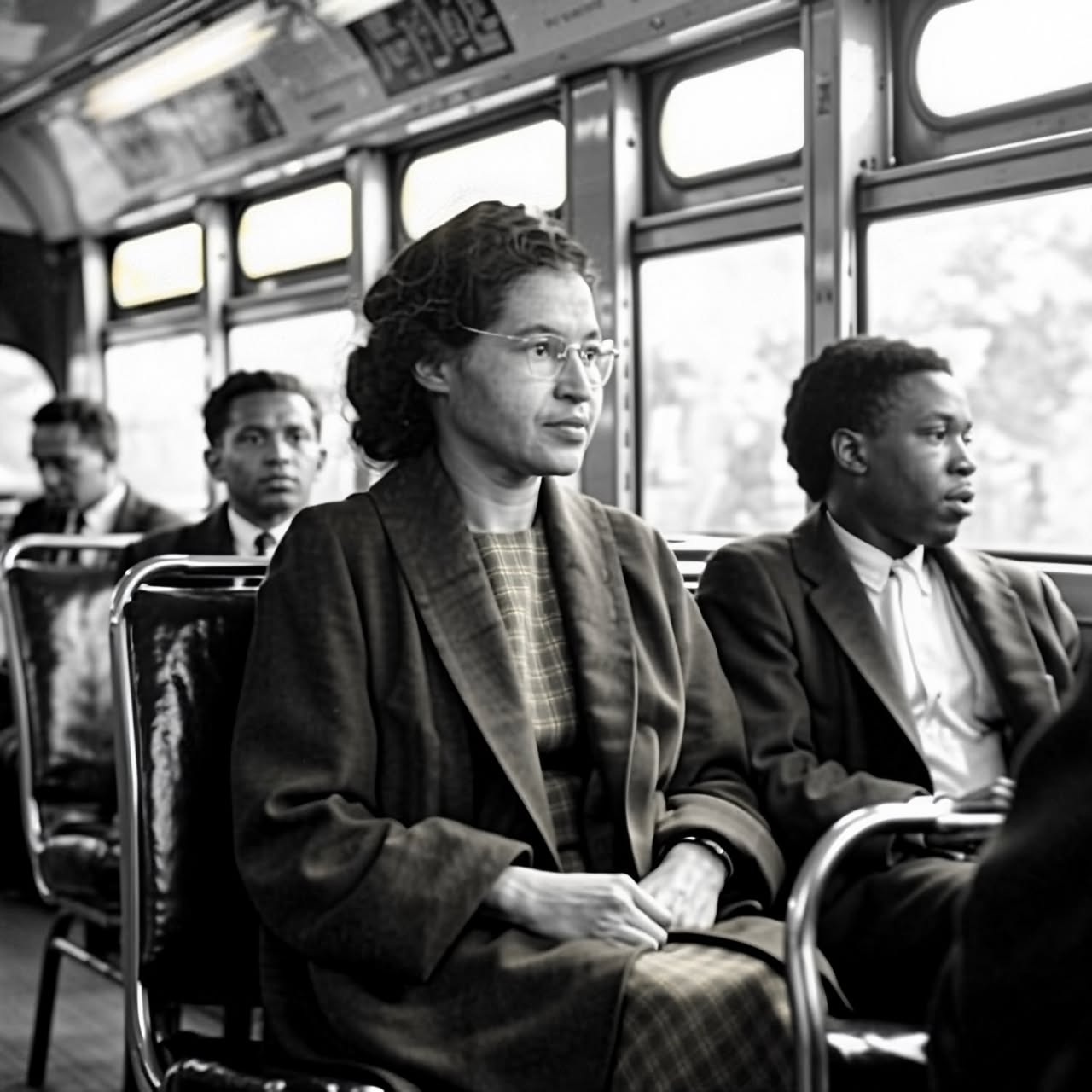
Called the “Mother of the Civil Rights Movement”. In 1955, she refused to give up her bus seat to a white man in Montgomery. Her arrest started the Montgomery Bus Boycott. This boycott lasted 381 days and made MLK Jr famous.
3. Malcolm X 1925-1965
He had a different approach than MLK. Malcolm X said Black people should protect themselves “by any means necessary”. He inspired the Black Power movement. He was assassinated in 1965.
4. John Lewis 1940-2020
He was the youngest speaker at the March on Washington. He led the Selma to Montgomery march in 1965 where police beat protestors. This event is called “Bloody Sunday”. Later he became a US Congressman for 33 years.
3 Laws That Changed America Forever
1. Civil Rights Act of 1964
This is the most important civil rights law. President Lyndon B. Johnson signed it. The law banned discrimination based on race, color, religion, sex, or national origin. It ended segregation in restaurants, theaters, hotels, and jobs. Companies with 15+ employees could not discriminate in hiring.
2. Voting Rights Act of 1965
Before this law, Southern states used literacy tests and poll taxes to stop Black people from voting. This law banned those tricks. Federal workers went to Southern states to register Black voters. After this law, Black voter registration increased from 23 percent to 61 percent in 4 years.
3. Fair Housing Act of 1968
This law was passed 7 days after MLK Jr was killed. It banned discrimination in selling or renting houses. Landlords could not refuse people because of their race. This helped end housing segregation.
Tactics Used in the Civil Rights Movement
The movement was successful because of smart strategies:
- Nonviolent Protest: Sit-ins, marches, and boycotts. Protestors did not fight back even when police beat them. TV cameras showed this violence to all Americans.
- Legal Action: The NAACP filed court cases. The Brown v. Board case ended school segregation.
- Media Coverage: TV brought the movement into every house. When Americans saw children attacked by police dogs in Birmingham, public opinion changed.
- Economic Boycotts: The Montgomery Bus Boycott cost the bus company 70 percent of its income. Money pressure worked.
Impact of the Civil Rights Movement Today
The movement did not solve all problems, but it created legal equality. Because of this era:
- Schools are integrated. Black and white students study together.
- Voting is protected. The Voting Rights Act still protects minority voters.
- Workplace discrimination is illegal. You cannot be fired because of your race.
- It inspired other movements. The Women’s Rights, LGBTQ Rights, and Disability Rights movements used the same tactics.
Conclusion
The Civil Rights Movement from 1954 to 1968 was the Founding Era of modern American equality. Leaders like Martin Luther King Jr and Rosa Parks used courage and nonviolence to change unjust laws. The Civil Rights Act, Voting Rights Act, and Fair Housing Act gave legal rights to millions.
This movement proves that ordinary people can change a country through protest and unity. The fight for equal rights is still not complete, but the legal foundation was built in this era. Every American benefits from the freedom won during these 14 years.
Alt Text for Image: Martin Luther King Jr leading Civil Rights March on Washington 1963 I Have a Dream speech American Civil Rights Movement 1954 1968
Caption: August 28, 1963: Dr. Martin Luther King Jr. delivers his famous 'I Have a Dream' speech during the March on Washington, a defining moment of the Civil Rights Movement