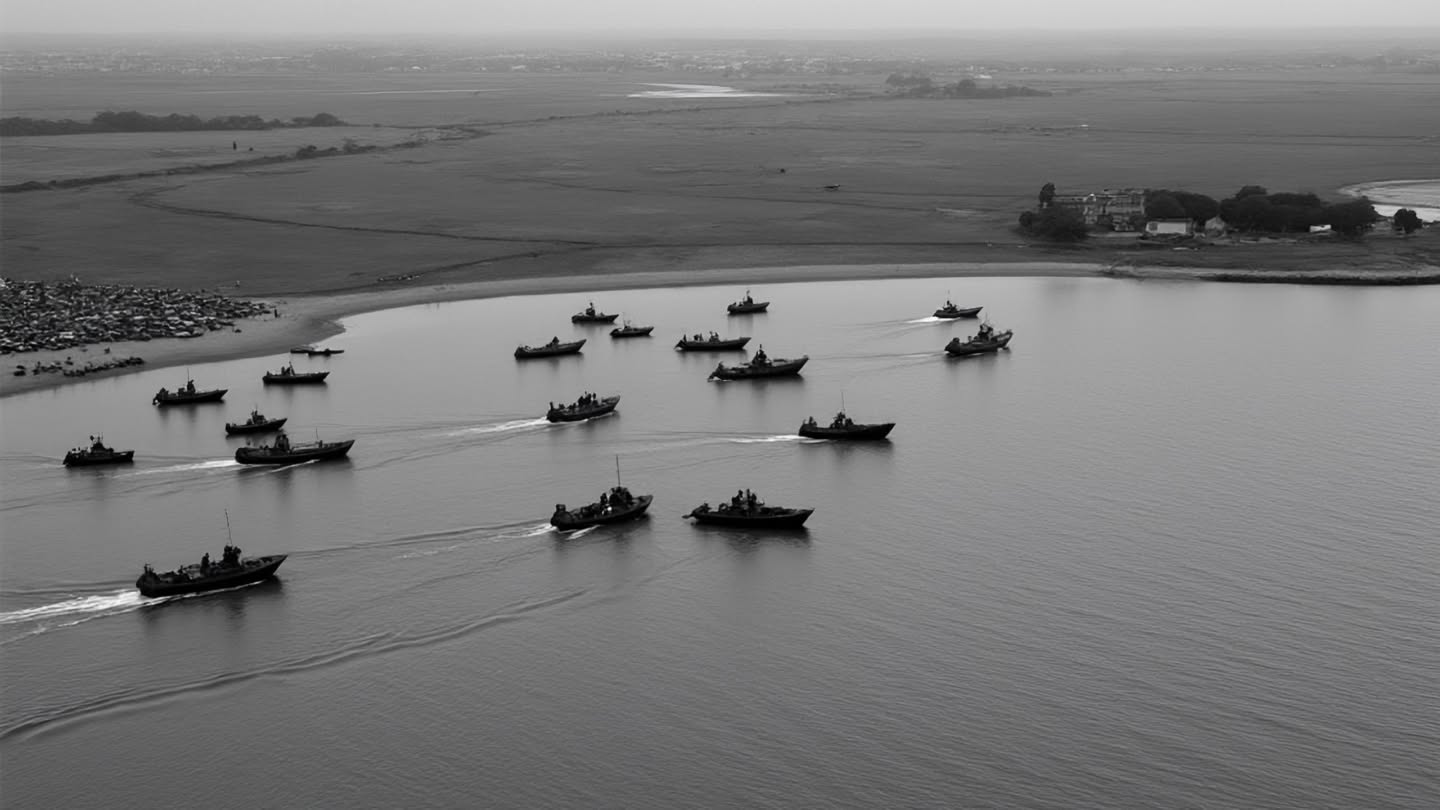
June 6, 1944 changed World War II. That morning, Allied forces from America, Britain, and Canada launched a massive attack on Nazi-occupied France. The invasion happened on five beaches in Normandy. The code name was Operation Overlord. History calls it D-Day.
Germany had controlled France since 1940. Adolf Hitler built a strong defense along the coast called the Atlantic Wall. It had bunkers, mines, and barbed wire. The Allies knew a direct attack would be costly. But they had no choice. They needed to open a new front in Europe to help the Soviet Union, which was fighting Germany in the east.
General Dwight D. Eisenhower commanded the Allied forces. Planning started in 1943. The Allies gathered over 2 million soldiers in England. They built thousands of ships and landing craft. To fool Germany, they created fake army camps and sent false radio messages. Hitler thought the main attack would come at Calais, not Normandy.
The invasion started just after midnight. Paratroopers dropped behind German lines to secure bridges and roads. At 6:30 AM, the first boats hit the beaches. The five beaches were Utah, Omaha, Gold, Juno, and Sword. American troops landed at Utah and Omaha. Omaha was the hardest fight. German guns on the cliffs killed many soldiers as they left their boats. Still, the Americans pushed forward.
British and Canadian troops landed at Gold, Juno, and Sword. They faced heavy fire but moved inland faster. By the end of June 6, the Allies had landed 156,000 men in France. They controlled a strip of coast 50 miles long. The cost was high. About 4,400 Allied soldiers died that day. Thousands more were wounded.
D-Day worked because of teamwork and surprise. Germany was caught off guard. Within two months, the Allies freed Paris. By May 1945, Germany surrendered. D-Day did not end the war by itself. But it started the final push that defeated Hitler.
Today, D-Day is remembered as a day of courage. The beaches of Normandy have monuments and cemeteries. The invasion proved that free nations could unite and win against dictatorship. It remains the largest seaborne invasion in history.
Key Facts:
- Date: June 6, 1944
- Location: Normandy, France
- Allied Leader: General Dwight D. Eisenhower
- Troops Landed: 156,000
- Result: Allies gained foothold in Europe
Tags: Normandy Invasion, D-Day 1944, World War II, Operation Overlord, Eisenhower, Allied Forces